Academics
This page contains information about the psychology department at Smith College and general academic resources for psychology students.

Psychology Curriculum
Three Learning Tracks
The psychology curriculum is structured to develop the skills and objectives set forth in the department’s learning goals. Courses are generally organized around the following tracks of study:
- Mind and Brain
- Cognitive Psychology
- Cognitive Neuroscience
- Neuropsychology
- Health and Illness
- Clinical Psychology
- Health Psychology
- Sports Psychology
- Person and Society
- Developmental Psychology (technically spans all 3 tracks)
- Personality Psychology
- Social Psychology
Please note that Smith doesn’t have classes for some sub-disciplines in psychology (e.g. industrial-organizational psychology, speech-language pathology). Students are strongly recommended to look at course catalogs for Amherst College, Mount Holyoke College, and the University of Massachusetts at Amherst.

Psychology Major Requirements
Ten courses total.
| Type of Courses | Description | Eligible Courses |
|---|---|---|
| Foundation Courses | Three mandatory courses, typically completed by the end of the sophomore year. | PSY 100, SDS 201/210 & SDS 100, PSY 202 |
| Breadth Courses | At least one course must be taken in each of the three learning tracks. | 100-, 200-, and 300-level courses in Mind & Brain, Health & Illness, and Person & Society |
| Depth Courses | Two colloquium courses. Two courses at an advanced level, one of which must be seminar. | Two 200-level courses. At least one 300-level course, such as a Seminar or Research Seminar; Special Studies (PSY 400) or Honors Theses (PSY 430D / 431 / 432D) can count as an advanced level course. |
Psychology Minor Requirements
Six courses total.
| Type of Courses | Description | Eligible Courses |
|---|---|---|
| Foundation Courses | Two of the three foundation courses for the major. | PSY 100, SDS 201/210 & SDS 100 OR PSY 202 |
| Breadth Courses | Four courses must be taken across at least two learning tracks. | 100-, 200-, and 300-level courses in Mind & Brain, Health & Illness, and/or Person & Society |
| Depth Courses | One colloquium and one seminar. | One 200-level course from the Breadth Courses. One 300-level course from the Breadth Courses. |
How to Declare a Major/Minor
There are two primary ways to declare:
- Ask one of your Psychology instructors to be your adviser
- Some professors may be at advisee capacity and unable to take you on at that time. Don’t be intimidated to ask and don’t take it personally if they say no!
- Contact the Psychology Department Assistant Laura Fountain-Cincotta (lfountaincincotta@smith.edu) asking to be paired with an adviser
Broadening Your Horizons: Other Paths of Study
Many students find that the psychology major is strengthened by complementary academic programs, whether through additional coursework, a minor, a second major, a concentration, or a Five College Certificate.
Common Academic Disciplines for Majors and Minors
It’s common for psychology majors to have a second major or minor in one of the following departments:
- Computer Science
- Major in CSC
- Minor in CSC
- Education and Child Study
- Major in EDC
- Minor in EDC
- Neuroscience
- Major in Neuroscience
- Minor in Neuroscience
- Statistical and Data Sciences
- Major in SDS
- Major in Mathematical Statistics
- Minor in SDS
- Minor in Applied Statistics
Sometimes, psychology majors might get a second major or minor in English Language & Literature, Government, Religion, Sociology, Studio Art, Study of Women, Gender, & Sexuality, or a foreign language (e.g. Spanish or French Studies). If you’re not interested in any of the aforementioned disciplines, that’s okay. Take advantage of Smith’s open curriculum and find what excites you!
Concentrations and Certificates
It’s not common for psychology majors to pursue a concentration but Community Engagement & Social Change, Poetry, and Journalism are concentrations that Smith psych students have declared in recent history. The Five College Certificates most compatible with the psychology major are Cognitive Neuroscience and Culture, Health, & Science but there are many more to explore. If your interests deviate from what’s listed, don’t hesitate to chart your own path. Who knows? Maybe other Smithies will follow your lead.
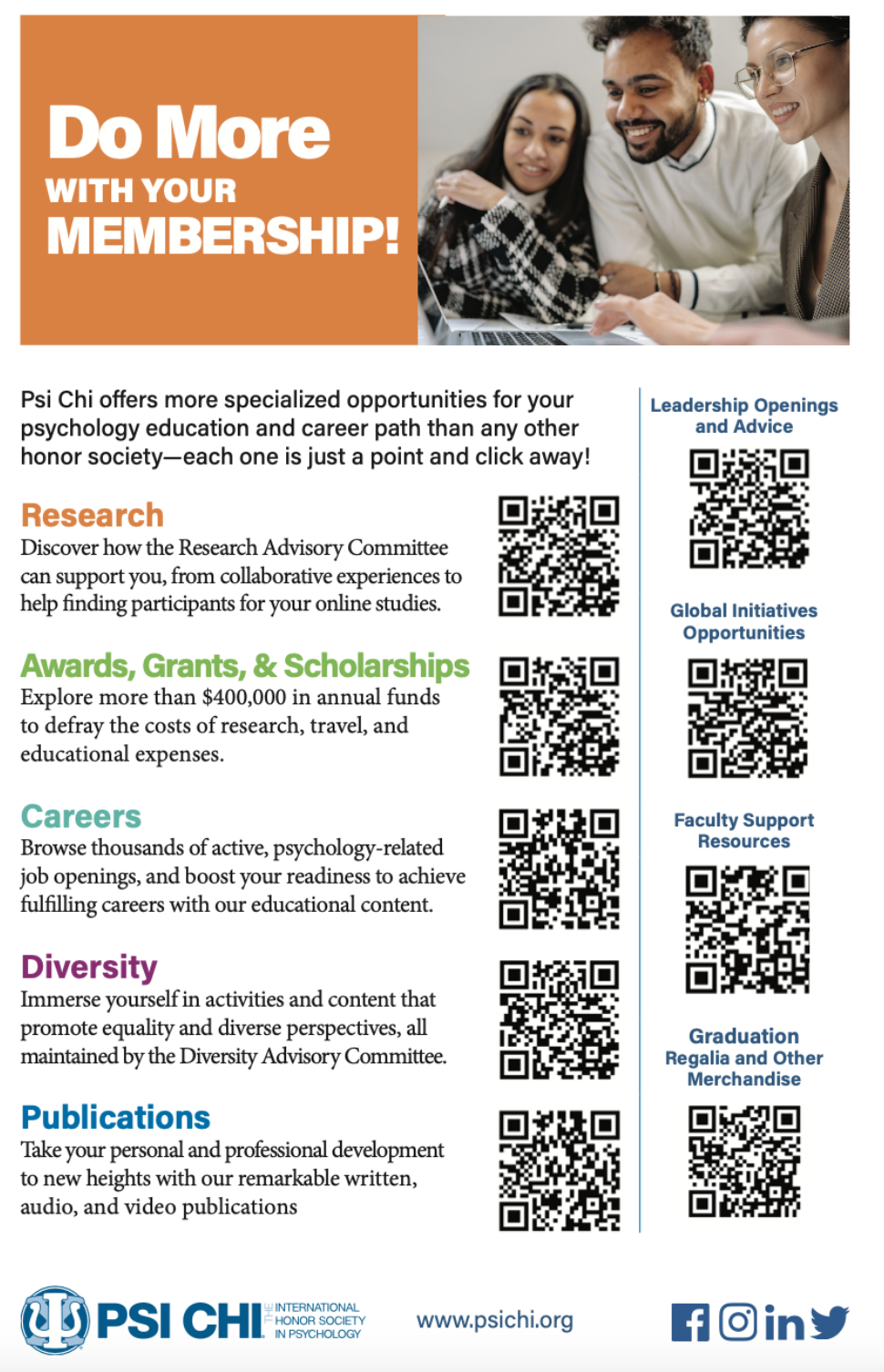
Psi Chi Honor Society at Smith
Psi Chi is an international honor society that recognizes students majoring in psychology. Being a member of Psi Chi grants you opportunities to learn about and present research, access to a wide array of grants and scholarships, introduces you to a network of psychology scholars within Smith’s chapter and across the globe, looks great on your CV, and much more!
To be eligible for acceptance in Psi Chi here at Smith, you must have:
- Declared a major or minor in psychology at Smith College
- Completed at least 6 psychology courses, or have completed 5 psychology courses at the time of application and currently be enrolled in 1 or more psychology course
- A cumulative GPA of 3.0 or higher in general studies, and a cumulative GPA of 3.3 or higher in all psychology courses
On occasion, by petitioning for special consideration, admittance to Psi Chi may be achieved for those who do not meet the minimum GPA requirements for membership.
Academic Resources
Writing
Writing for psychology can be a challenge for some undergraduates as most students have not taken college-level psychology courses before.
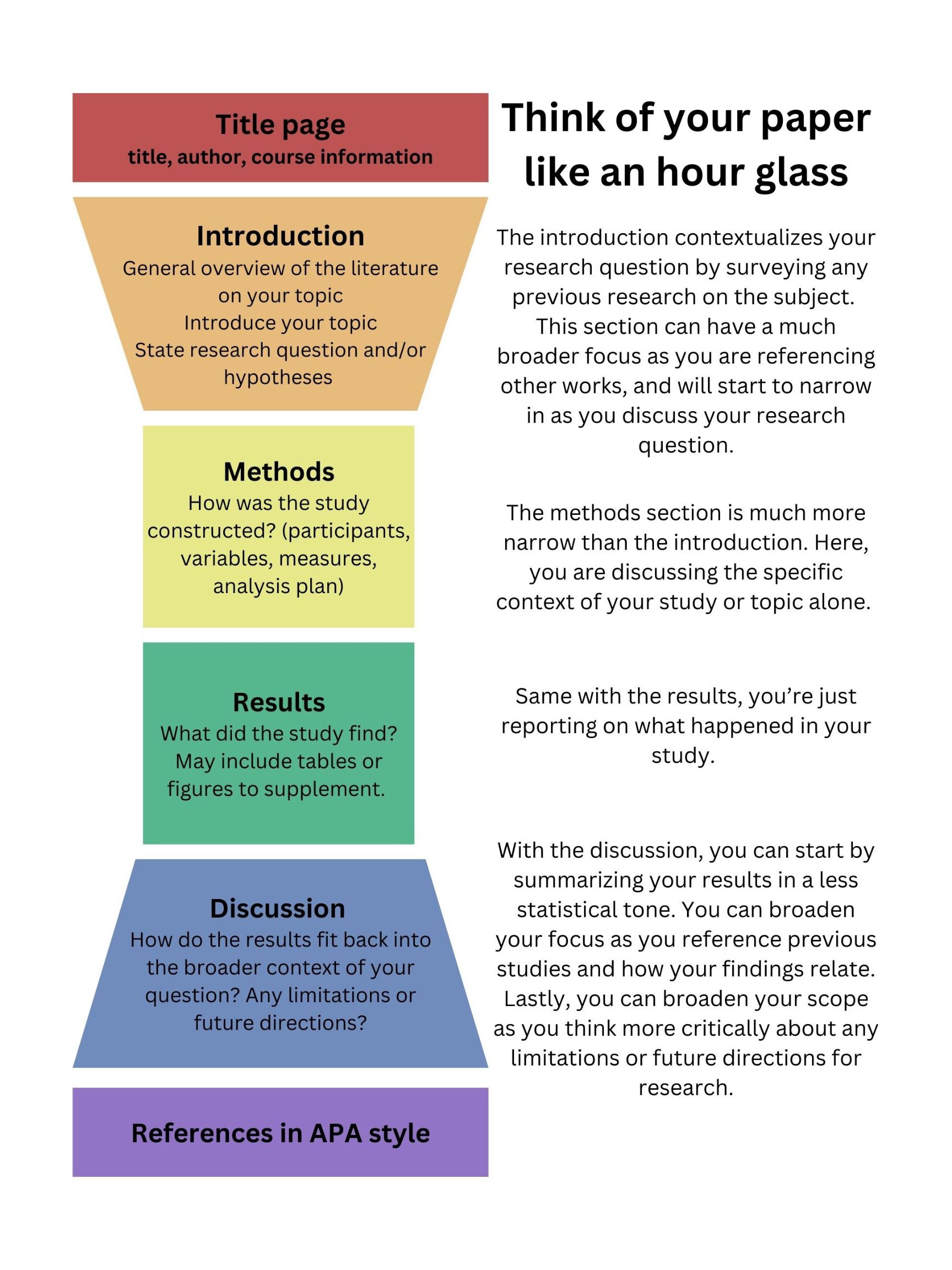
Research Paper Structure
APA Citation Guide
several resources coming soon…
College Resources
Smith offers a number of resources for students seeking academic support.
- The Jacobson Center
- Offers resources for writing assignments at any stage: from brainstorm to final revisions
- You can book an appointment with a peer tutor or learning specialist
- The Spinelli Center for Quantitative Learning
- Offers tutoring resources for various quantitative fields, such as statistics
- Attend drop in hours with student tutors or specialists, or make an appointment
- Your course may advertise a designated time and place for tutoring specific to your coursework - always ask your instructor!
- Attend office hours and talk to your professor directly
- The best way to get help is directly from the source. Not everyone feels comfortable coming to college and attending office hours, but it is very normal and encouraged
- Plan out content for your meeting ahead of time
- Office hours help you with course content, demonstrate participation, and can help you form a closer working relationship with your professors